
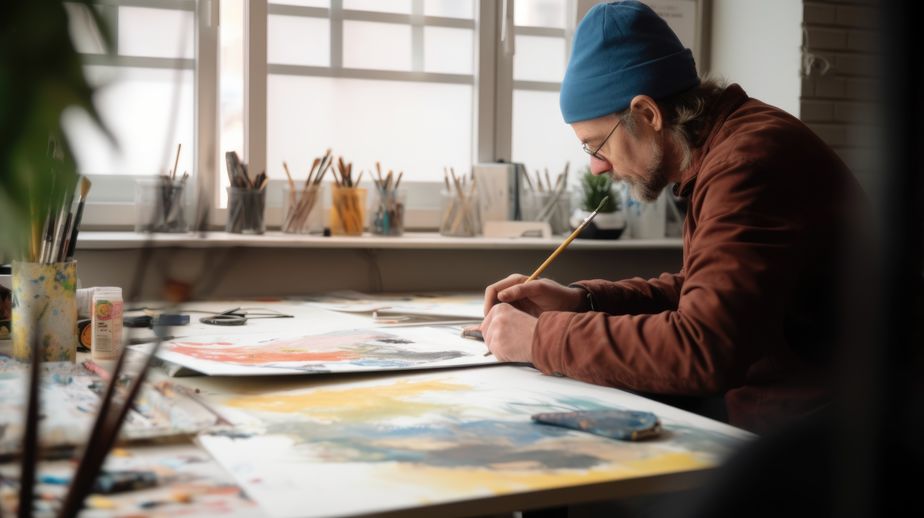
Not everyone who loves art wants a formal degree. Some people never had the chance to study art when they were younger. Others have busy careers or families and simply cannot commit to a university schedule. Many are hobbyists who want to improve their skills without turning art into a full-time pursuit. Still, the desire to create remains strong. Community-based art studios have become the answer for people who want real learning, real practice, and real creative connection without enrolling in a traditional program.
These studios offer something that sits comfortably between self-teaching at home and formal art school. They provide instruction, shared workspace, and exposure to other artists in an environment that feels welcoming rather than academic. For many people, this is where artistic growth truly begins.
Art Education That Fits Real Life
Traditional degree programs demand years of study, significant tuition, and fixed class schedules. That structure works for some but creates barriers for many others. Community studios take a different approach. They offer short courses, single day workshops, weekly classes, and open studio hours. Students can choose what fits their schedule and their interests.
This flexibility allows people to explore art without pressure. Someone can start with a drawing fundamentals course, try watercolor next, and experiment with mixed media later. There is no long-term commitment required. Learning becomes something that adapts to life rather than competing with it.
Because of this freedom, students of all experience levels feel comfortable joining. Absolute beginners sit alongside practiced painters. No one feels behind. Everyone is simply learning.
Learning From Artists Who Actually Practice
One of the most valuable aspects of community studios is the instructors. In many cases they are not just teachers. They are working artists who actively create and exhibit their own work. Students get to see how artists think, plan, revise, and solve problems.
This kind of learning feels natural. Instead of rigid lesson plans, students observe real creative decision making. They hear honest conversations about composition, color choices, and material challenges. They learn that unfinished pieces and failed experiments are normal parts of the process.
For those who never studied art formally, this experience replaces classroom theory with practical insight. It also builds confidence quickly because students realize that even skilled artists continue learning.
The Power of Creating Together
Art can be a solitary pursuit. Many people try to teach themselves at home and lose momentum because there is no feedback or encouragement. A shared studio changes everything.
Community studios create spaces where people talk about their work, ask questions, and share discoveries. Critique groups help artists see their work more clearly and understand how others interpret it. Simple conversations during class breaks often lead to new ideas and renewed motivation.
Being surrounded by other creative people builds confidence. Progress becomes visible. Challenges feel manageable. Over time, students begin to identify as artists rather than people who simply take art classes.
Exploring Different Mediums Without Risk
Formal art education often requires choosing a concentration early. Community studios encourage exploration. Painting, drawing, collage, printmaking, pastels, and mixed media may all be available under one roof.
This approach benefits learners who are still discovering their style. Someone may start with acrylic painting and later realize they prefer watercolor. Another might find joy in expressive mixed media rather than realistic drawing. Because workshops change frequently, students can experiment without investing heavily in one direction.
This variety keeps learning exciting and prevents creative burnout.
Real Experience Exhibiting Artwork
Many self-taught artists never learn how to present their work publicly. Community galleries fill that gap. Students and resident artists often have opportunities to display finished pieces in rotating exhibitions. They learn how to frame their work, write artist statements, price artwork, and talk with visitors.
This step is meaningful even for those who do not plan to sell art. Seeing work displayed on a gallery wall validates effort and progress. It gives artists a sense of purpose and pride that fuels further growth.
A Creative Space for Every Stage of Life
Community studios attract teenagers, young adults, working professionals, retirees, and lifelong hobbyists. No portfolio is required. No degree is expected. People arrive with curiosity and leave with skills, friendships, and renewed creativity.
For many, these studios become more than classrooms. They become creative homes. Places where learning feels joyful, mistakes feel safe, and personal expression is celebrated.
Filling the Gap Between Passion and Practice
Learning art without a degree does not mean settling for less. It means choosing a path that fits real life while still offering meaningful education. Community-based studios provide guidance, shared energy, professional insight, and opportunities to grow. They fill the gap between wanting to create and knowing how to move forward.
For anyone who has ever thought about returning to art, trying something new, or simply finding a creative community, these spaces offer a place to begin and a place to belong.
Contact Creative Ventures Gallery at (603) 672-2500 today or visit us online to learn more about our art classes and workshops in Milford, NH.